
Presentation at IASDR’25 Workshop
Category : Image PostDate : December 3, 2025
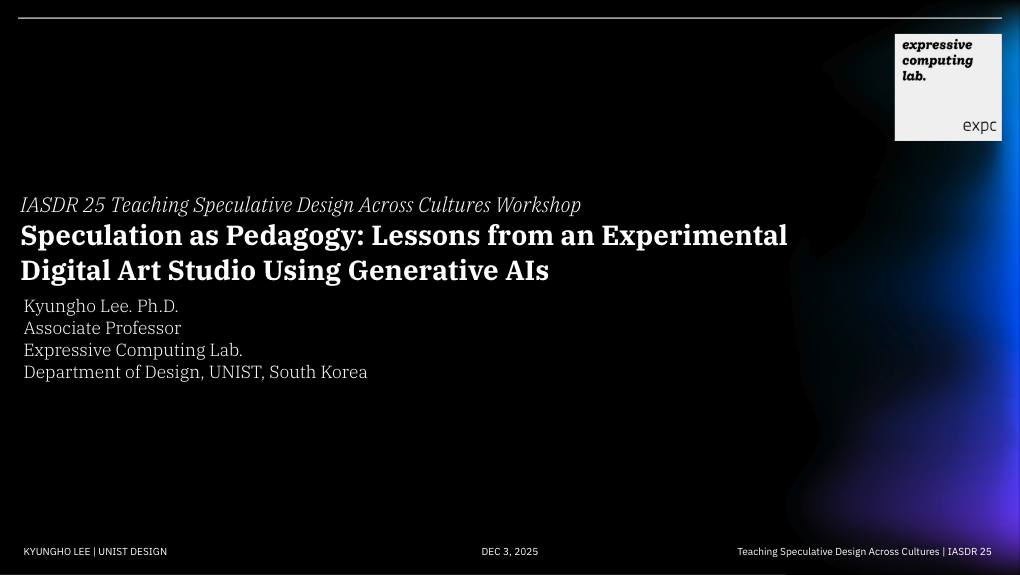
The Challenge
GenAI is fundamentally reshaping design. But how do we teach it? If AI automates the routine labor, teaching it in an engineering-focused way is missing the point. We need a new pedagogy that’s ‘designerly’—focused on human-centered intent and critique.
The Solution: Speculation as Pedagogy
That’s the core of our experimental studio at UNIST. We treat Generative AI, like Midjourney, not just as a production tool, but as a medium and a method for speculative inquiry. We shift the focus from technical execution to asking: “What if?” This encourages critical making, prioritizing imagination and critique over mere technical correctness, and teaching students how to interrogate the AI’s inherent biases and defaults.
The Evidence: Assignment Scaffold
Our class uses a three-assignment scaffold—Portrait, Person of the Year, and Person from the Future—to build speculative literacy. The learning logic is built around diagnosing misalignment between intention and AI output, forcing students to iterate prompts and justify their final selection with structured writing. This process created a ‘productive friction’ where the AI’s failures led to the most critical learning moments about bias, representation, and translating intuition into rigorous, articulated reasoning.
Conclusion & Call to Action
The key takeaway for educators is clear: Frame friction as productive inquiry. Normalize ambiguity. And, most importantly, assess the student’s process and reflection, not just the polished artifact. Our challenge now is to make student discomfort with this endless ambiguity a more meaningful learning experience. I look forward to discussing how we can assess the depth of that inquiry together.